

The Van Gogh museum is participating in a threesome for its latest exhibition of Nabis art. Together with Musee d’Orsay in Paris and the Mitsubishi Ichigokan Museum in Tokyo, the museum directs attention to the works of the Swiss artist Félix Vallotton. This painter was known as the ‘Foreign Nabi’ painter (no qualms with being politically incorrect, our forebears), who gained a reputation across the whole of Europe after establishing himself in Paris in the 1890s.
The three museums have collaborated in order to acquire the largest possible volume of work by this artist and will exhibit them together, one after the other. What do people who visit this Vallotton show stand to benefit from the international collaboration? For starters, Vallotton was an invigorating member of the Nabis, the French art movement which dominated the art world for a brief but glorious period of time.
The Nabis formed almost unintentionally, but most of the members studied at the Académie Julian in Paris and took Paul Gauguin as their great inspiration, adopting Post Impressionist, avant-garde stylings in their work. None of the Nabis mixed their colours and they emphasised emotions, colour and composition.
The group was plucked from obscurity and cast into the limelight to some extent due to the journalistic exploits of Maurice Denis, who reached the right audiences with his writings and who tapped fertile ground stating that Nabis painting involved “a flat surface covered with colors assembled in a certain order”. That meant that the group refrained (at least in its initial days) from using perspective. Those words still resonate with us, especially because we know what did this for the Fauves, and then the Cubists.
The group was given the name Nabis by a poet. The word happens to be Hebrew for ‘prophets’. Nabis meetings are now legendary as its members defined at one point the international avant garde.
What else can I say in favour of the Nabis? Apart from Vallotton and Denis, memorable members included Pierre Bonnard, Édouard Vuillard, KerXavier Roussel and Paul Ranson. Themes in Vallotton’s work include interiors, toilettes, female nudes, landscapes and still lives. At the Van Gogh museum, you will be able to see various Vallotton works around these subjects. After his period with the Nabis, Vallotton also came to be associated with aesthetic trends like the Neue Sachlichkeit (New Objectivity).
Recently, the Hermitage Museum in Amsterdam dedicated a show to the Nabis and took the Russian angle, by reconstructing the music salon of the rich Russian art collector Ivan Morozov, which was decorated by Denis in 1908. This show, I just noticed, has been extended until March 30th and you can read my guide about it here.
One thing a visitor to the Van Gogh Museum will ask when viewing Vallotton works in the vicinity of the great art by Van Gogh will be whether the latter artist would have been in the know of this man. It’s questions like these that will undoubtedly be answered. I won’t spoil the fun by telling you now.
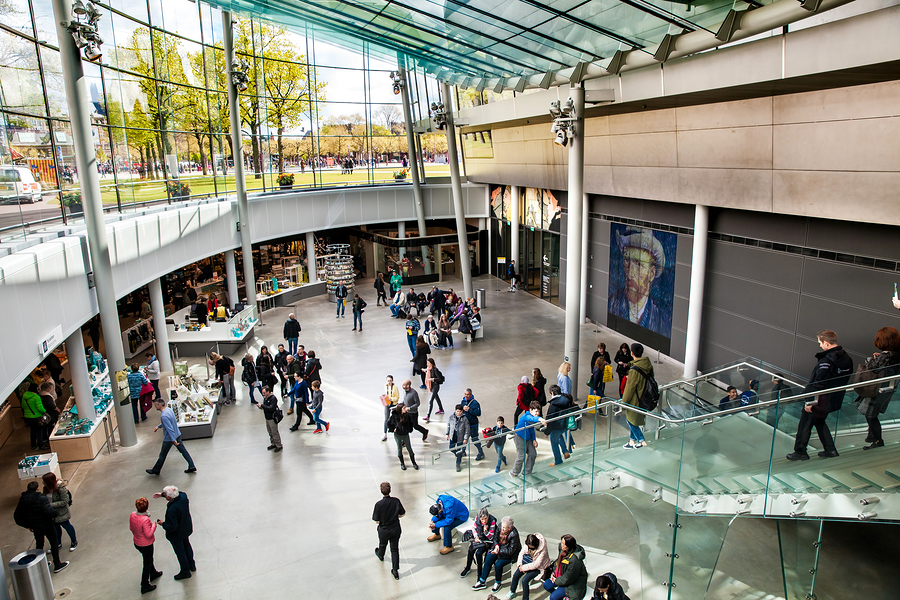
Go over to the Van Gogh Museum and ‘see for yourself’. The Museum is located right behind the Rijksmuseum in central Amsterdam. You can’t miss it when you take a stroll from your Amsterdam Apartment rental in the breezy part of the city center. The Van Gogh museum runs this show until 1 june 2014, after which it will move to Tokyo.


