

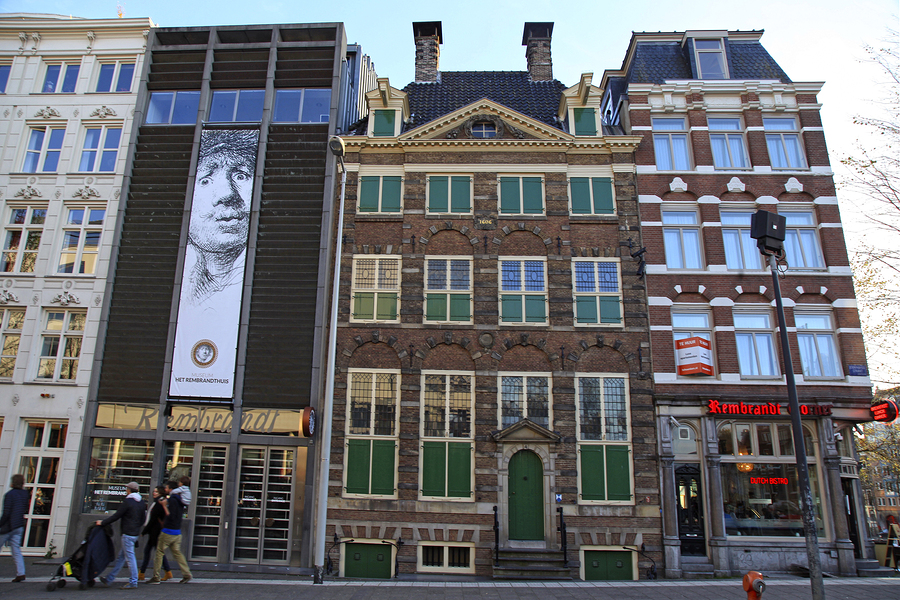
Curators don’t really have the luxury of experiencing ‘field days’ all too often. That’s certainly true of those involved with Old Masters such as Rembrandt van Rijn, who’s so dead that there’s virtually zero chance of anything relating to his real life surfacing these days.
And yet, recently two items did saunter into the dusty corridors traversed by only the most intimate of Rembrandt connoisseurs. Both are etchings the world up till now had no knowledge of, and both have been attributed to no one else but the grandiloquent master himself. There’s a tinge of the mysterious too, as these latest developments in the world of Rembrandt iconology coincide almost to the precise date with the opening of an exhibition entitled ‘Rembrandt, Or Not, Old Drawings, New Names’ at the Rembrandt Huis in Amsterdam.
The first discovery of a genuine Rembrandt etching took place about 400 miles away from Amsterdam, at the Scottish National Gallery in Edinburgh. Conservation expert Tico Seifert dug up the unique etching in the cellars of the establishment. It shows the portrait of Amsterdam preacher Jan Cornelis Sylvius who was related to Rembrandt’s wife Saskia and was the godfather of their daughter Cornelia.
And only days later, Google staff who were scanning three million books in a Gent library (Belgium), chanced upon a 17th-century work entitled Der ZeevaertLof (Ode to Seafaring Lives) with an original Rembrandt etching. It doesn’t get much better than that!
It goes without saying that the exhibition at the Rembrandt Huis is pretty darn topical. On show are sixty drawings by Rembrandt chosen by the museum’s curators because they shed light on the criteria that art historians rely on when branding a work genuine or not.
“How do you recognise a ‘genuine Rembrandt’ and what distinguishes his work from that of his pupils and contemporaries? The attribution of a work of art is a fascinating aspect of art-historical study,” according to the information available on the Rembrandt Huis website.
The curator in charge of the project, Peter Schatborn, says that the works on display have one thing in common; they are all attributed to 17th-century artists. Schatborn, who is the head of the Rijksmuseum’s Prints and Drawings department and has been for decades, is also closely involved with the Rembrandt Huis. He is one of the world’s leading specialists on this subject and allows you a peek into the kitchen in a spoken commentary during which he reveals his research methods.
Turns out Schatborn and his colleagues are focusing in particular on the characteristics of artists’ styles and the arguments that are commonplace factor in attribution. I.e. they verify the hearsay as well as the look see. “Visitors will be able to look over the expert’s shoulder, as it were, and so discover the intimate properties of the artist’s hand.”
The exhibition is a collaborative project between the Rembrandt Huis, the Rijksmuseum Amsterdam and the Fondation Custodia in Paris, which have all sourced works, as have the Berlin Kupferstichkabinett and the British Museum.
Meanwhile, I am googling like crazy for the Gent print but it looks like Rembrandt’s daughter’s sugar daddy has taken a wrong turn in the cyber network somewhere.
Life’s too short to fuss over that. Hopefully you will make your way to the Rembrandt show and find plenty of inspiration. From any given Amsterdam Apartment accommodation, the directions to this place are here.


