

When you landed by plane at Amsterdam airport for your short holiday in an Amsterdam Apartments rental accommodation, you may have seen the green rooftops of many Amsterdam houses and their hanging gardens, but were likely too busy marvelling at the much-hyped flower fields, for which the Schiphol landing experience is primarily known.
Still, there are many, many green rooftops in Amsterdam and this subject surprisingly leads us to what is another common sight for tourists: those of gents toilets. Any tourist will have noticed the many urinoirs in the city.
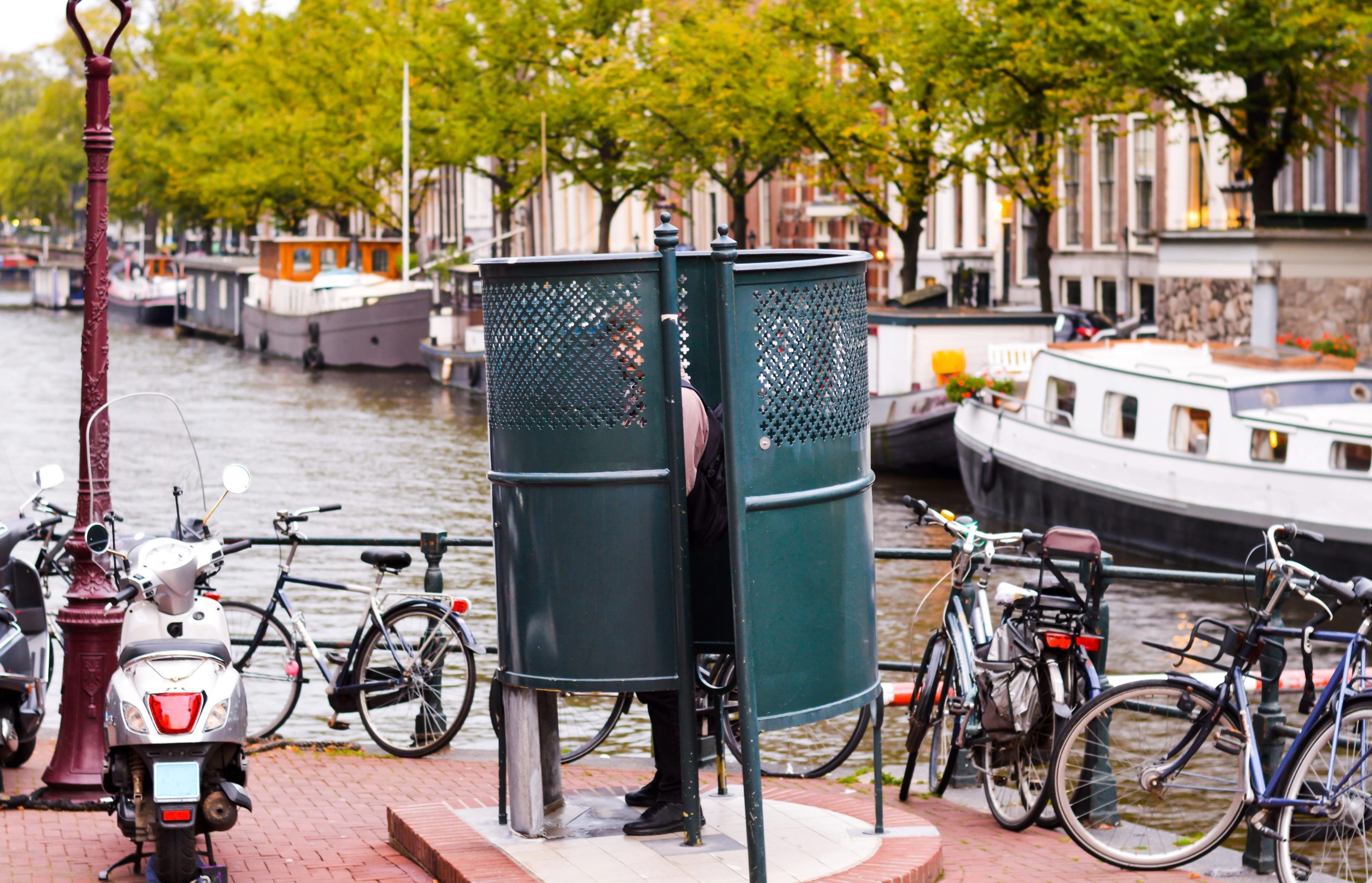
The design of a typical Amsterdam urinal is somewhat intriguing although I wouldn’t suggest venturing into one, unless you are a member of the male half of humanity. The intriguing part of the urinals, really, is their design. They are man-height, c-shaped, metal contraptions painted in Amsterdam’s typical stark green – a green that is almost black. The upper part has rhythmically dispersed square holes in it, so by-passers can see very clearly if a urinal is occupied or not. They drain right into the canals, which, when you’ve seen the many busting for a piss late at night, you will appreciate is still more hygienic than urinating in a corner.
Newer urinal models are downright disgusting in terms of their design. They look like mutilated continental, grey phone booths.Their only redeeming feature is that they are plumbed. The urine goes into the waste water system, instead of directly into the canals.
Freely accessible and free to use, both types of public conveniences are liberally dispersed all over Amsterdam. The urinals might take some getting used to if you have just arrived as they are so out in the open, symbolising to an almost unsettling extent with Dutch pragmatism. Take any tour of the city and your tour guide will undoubtedly point out a urinal and taking the opportunity to lecture you some more on this unmistakable liberalism which so pervades Dutch culture….
Let me tell you the latest on this pragmatic approach the Dutch take to life, the universe and everything else, especially toilets. As the story goes in the national press, Amsterdam’s water company, Waternet, has started harvesting urine from particular urinals in order to demonstrate that it’s pretty easy to resource generous amounts of natural fertilizers.
The logic behind this development is one that underscores warnings by environmentalists that by 2030 or so, world supplies of traditional fertilizers might start to rapidly dwindle. Any traditional fertilizer contains lots of nitrogen, potassium, and phosphorus, three elements also found in urine. So, although the idea of showering the yellow liquid on building rooftops could sound like a major health hazard, the pilot project is intended to show that collecting urine could actually rescue the world’s population from a much worse fate; starvation. Waternet is processing the urine into an upcycled fertilizer for public gardens and vegetated rooftops around the city. Call it peecycling if you want, the plants will be very grateful all the same.
In case you want to contribute to this laudable initiative, don’t just go to any urinal, but head to La Place de la Bourse where temporary urinals have been planted specifically for this project. If the pilot turns out the desired results, a larger project will get underway. Calculations by Waternet suggest that wastewater from one million people in Amsterdam could yield around 1,000 tonnes of powdered fertilizer each year. The plan is to lead the way globally and facilitate similar projects in other cities around the world.
So there you have it, Amsterdam’s authorities are looking to cash in on another facet of the tourist trip – this time it’s a bio-degradable ploy, what a relief.


