

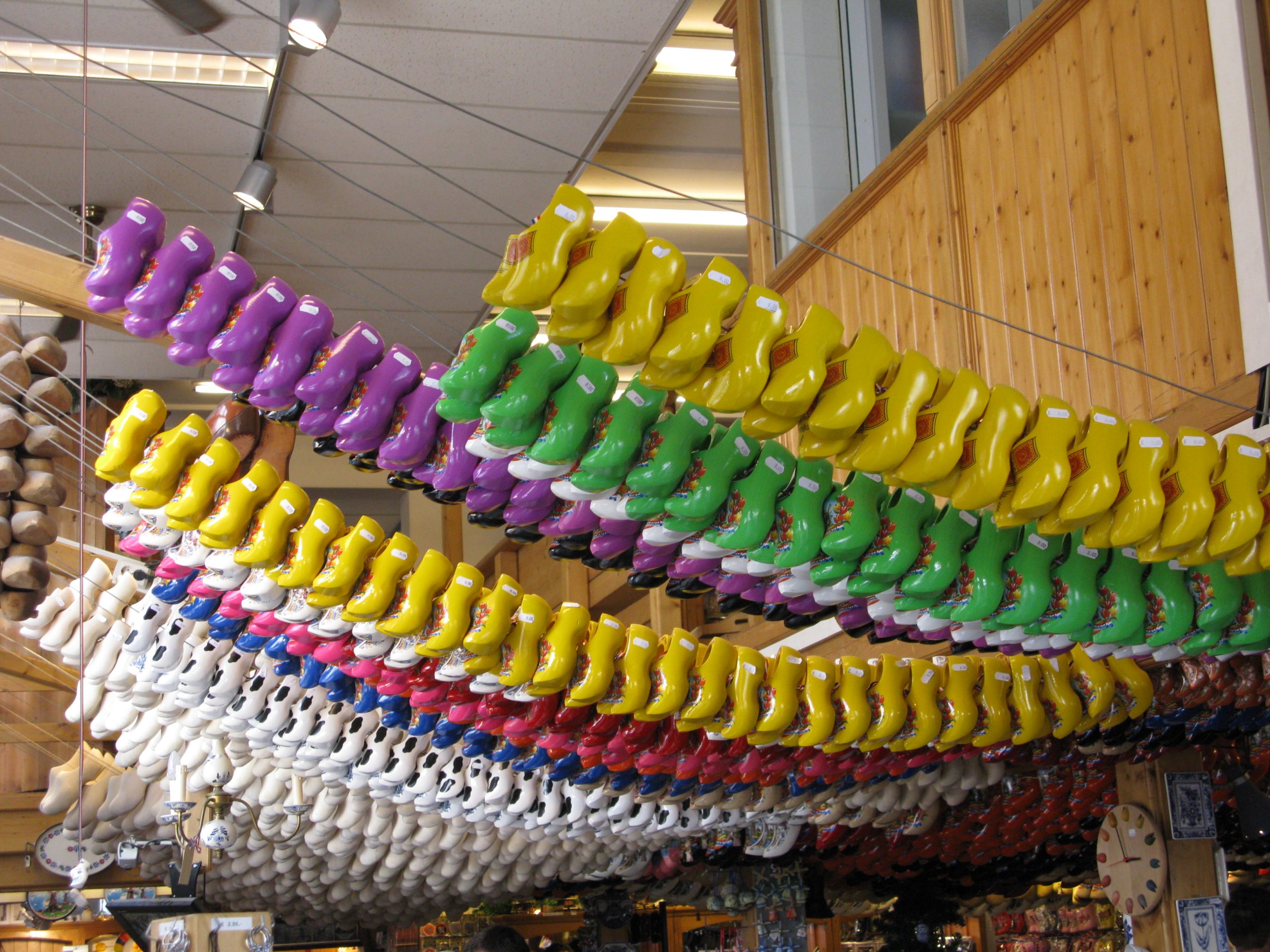
When you first landed in Amsterdam for your brief holiday, you must have been looking out for those Dutch people that wear them. I am on about clogs of course. When you didn’t spot even one little crumpled old man with the uncomfortable footwear, you must have given up.
Let me tell you; keep looking! Once in a while, you will still spot a Dutch man or woman wearing clogs. My grandfather for one always wore them. In the winter he used to put a bit of hay in them to keep his feet warm. He’d go through around three pairs a year, and on my grandparents’ doorstep there was always one pair of kiddies’ size clogs for me and my cousins to wear. My grandparents have passed on and lived about an hour away from Amsterdam, and I don’t own a pair myself. Yet the clog thing has not worn off in the Netherlands. What do you want, historic records show that clogs were already worn as early as 1367 and probably before.
In case you want to find out more about the ins and outs of this strange habit of turning poplar trees into wooden shoes, you can visit Amsterdam’s Klompenboer or the Wooden Shoe Factory in the St. Antoniebreestraat. The staff at the family-run business cater to tourists mostly but that does not mean they won’t give you a proper account of what clog making entails exactly. The walls of the shop are lined with pictures of the factory where wood is turned into footwear.
Aside from creating the famous clog shapes, clog manufacturers tend to paint clogs in a traditional yellow colour. The paint will make the clogs last longer. On the front of the shoe a red pattern is painted, which used to signal where a person was from, much like an emblem. Villages used to each have their own patterns.
Every Tuesday and Thursday the Wooden Shoe Factory demonstrates clog painting and if you book it beforehand, Bruno Jonker, a clog maker, can show you how to make the perfect clog and tell you whatever you want to know about this iconic footwear. He has a particularly funny story about bridal clogs too. Make sure to ask these people whatever you want to know, because they have a lot of knowledge about clogs.
For instance, did you know that the people who built the Dutch dykes used to wear specially-made clogs in which the instep was round instead of hollow? That way, they were able to use their clogs as a lever to lift the dyke stones under their crow bars. If you come across a Nike resembling clog that’s been worn, make sure to have it inspected by a pro as these specimens have long gone out of production since the completion of dykes in the Netherlands. Except for all things clog-related, including various antique clogs, the Wooden Shoe Factory sells Delft ornaments, toys, petfood and a mishmash of accessories including funny cuddly toys (don’t let those hideous things put you off!).


