

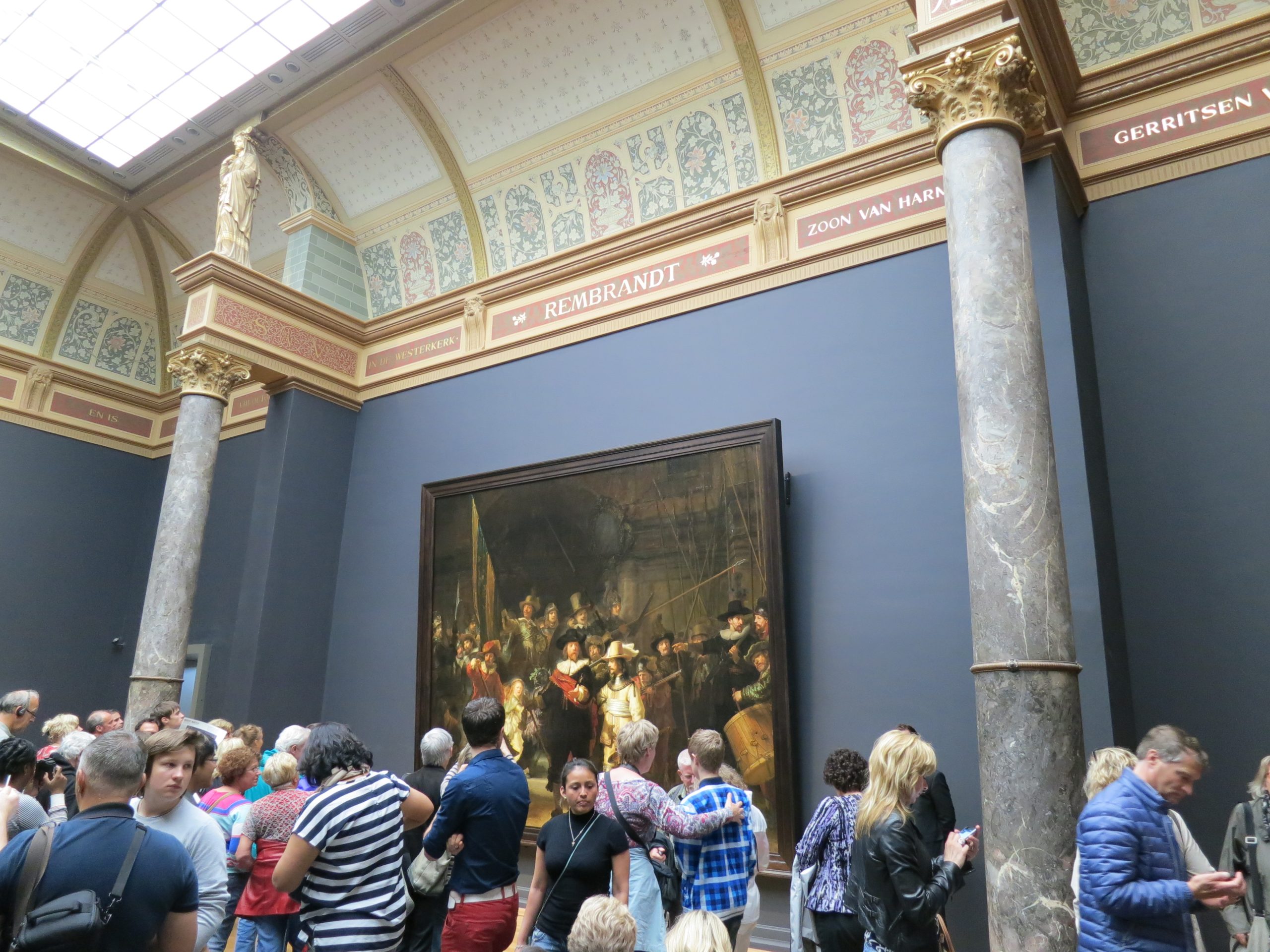
Rembrandt Harmenszoon van Rijn, commonly known as Rembrandt, is one of the most revered artists of the Dutch Golden Age. Rembrandt was born on July 15, 1606, in Leiden, Netherlands. His work is renowned for its emotional depth, masterful use of light and shadow, and remarkable realism. His extensive oeuvre includes portraits, landscapes, historical narratives, biblical scenes, and self-portraits. Each painting reflects his keen observation of the human condition. Read more about Rembrandt van Rijn: The Dutch Master.
Early life and career of Rembrandt
Rembrandt began his artistic training at a young age, studying under local masters in Leiden before moving to Amsterdam, where he would spend most of his career. He quickly gained a reputation as a portraitist, capturing the likenesses of Amsterdam’s elite with extraordinary skill. His marriage to Saskia van Uylenburgh, the cousin of an art dealer, further bolstered his career, providing him with access to wealthy patrons.
Artistic style and innovations
Rembrandt’s ability to convey human emotion through his work is unparalleled. His paintings often feature dramatic contrasts between light and dark, a technique known as chiaroscuro, which he used to imbue his subjects with a sense of depth and vitality. His compositions are characterized by their dynamic yet balanced arrangements, drawing viewers into the narrative.
One of Rembrandt’s most famous works is “The Night Watch,” a large-scale painting that illustrates his innovative approach to group portraits. Instead of the static poses typical of the time, Rembrandt depicted the subjects in action, creating a sense of movement and life.
Later years and legacy
Despite achieving great success, Rembrandt’s later years were marked by personal and financial difficulties. He faced bankruptcy and lost many of his possessions. However, he continued to produce masterpieces until his death in 1669.
Today, Rembrandt is celebrated as one of the greatest artists in history. His influence can be seen in the works of countless artists who followed him. And his paintings remain a significant draw for art enthusiasts worldwide.
Where to find Rembrandt’s paintings in Amsterdam
Amsterdam is home to several institutions where you can admire Rembrandt’s masterpieces:
- Rijksmuseum: This iconic museum houses an extensive collection of Rembrandt’s works, including “The Night Watch”, “The Jewish Bride”, and numerous self-portraits. The Rijksmuseum offers a comprehensive view of Dutch art and history, making it a must-visit for any art lover.
- Rembrandt House Museum: Located in the house where Rembrandt lived and worked from 1639 to 1656, and where he created many of his masterpieces. The museum offers an intimate look into the artist’s life. It showcases a collection of his etchings and provides insights into his artistic techniques and personal history.
Visiting these locations provides an opportunity to experience Rembrandt’s art in the city that played a pivotal role in his career. Whether you are an art historian or a casual visitor, exploring Rembrandt’s legacy in Amsterdam offers a fascinating glimpse into the life and work of a true master.
Westerkerk and the Oude Kerk
Rembrandt van Rijn was buried in the Westerkerk in Amsterdam. He was laid to rest on October 8, 1669, in a rented grave, which was a common practice at the time for those who could not afford a permanent burial plot. As such, his remains were likely removed after a period of time to make space for new burials. So the exact location of his grave within the church is not known today. The Westerkerk is located near the Anne Frank House and is one of the most notable churches in Amsterdam.
Saskia van Uylenburgh, Rembrandt’s wife, is buried in the Oude Kerk (Old Church) in Amsterdam. She passed away in 1642 and was laid to rest in a family grave within this historic church. The Oude Kerk is Amsterdam’s oldest building, and it has a rich history, serving as a burial place for many notable figures from the city’s past.
Rembrandtplein
In 1852, King William III unveiled an iron statue of Rembrandt on the square. It is the oldest existing statue in Amsterdam and was cast in one piece, a remarkable feat for that time. In 1876, the name Botermarkt was changed to Rembrandtplein. Over time, the statue of Rembrandt has stood in various locations on the square.


